Dementia Care at Home in Wallingford: A Compassionate Guide for Families (2026)
What if the most effective environment for managing memory loss isn’t a clinical facility, but the very living room where your family’s history was written? It’s a question many families face when the challenges of cognitive decline begin to outweigh the comfort of the status quo. You likely want to honour your loved one’s wish to stay in their own space, yet the reality of 24/7 monitoring and the fear of midnight falls can lead to overwhelming caregiver burnout. Finding reliable dementia care at home Wallingford doesn’t have to mean choosing between safety and the sanctuary of a private residence.
We understand that you’re looking for a partnership that values human connection over clinical checklists. You deserve the peace of mind that comes from knowing professional support is managing symptoms like sundowning and memory loss with genuine kindness. This guide will show you how specialist live-in and domiciliary care preserves independence while helping you navigate the complexities of local Oxfordshire care funding. We’ll explore how person-centred support ensures your loved one lives a life defined by dignity and familiarity, rather than just a diagnosis.
Key Takeaways
- Discover why staying in a familiar environment is often the most effective way to manage cognitive decline and reduce daily anxiety.
- Learn how person-centred support addresses specific challenges like sundowning and wandering while preserving your loved one’s autonomy.
- Compare the benefits of the home sanctuary against residential care to make an informed decision about the future of your family’s wellness.
- Explore the five essential steps for arranging dementia care at home Wallingford, including how to navigate CQC-regulated assessments with ease.
What is Specialist Dementia Care at Home in Wallingford?
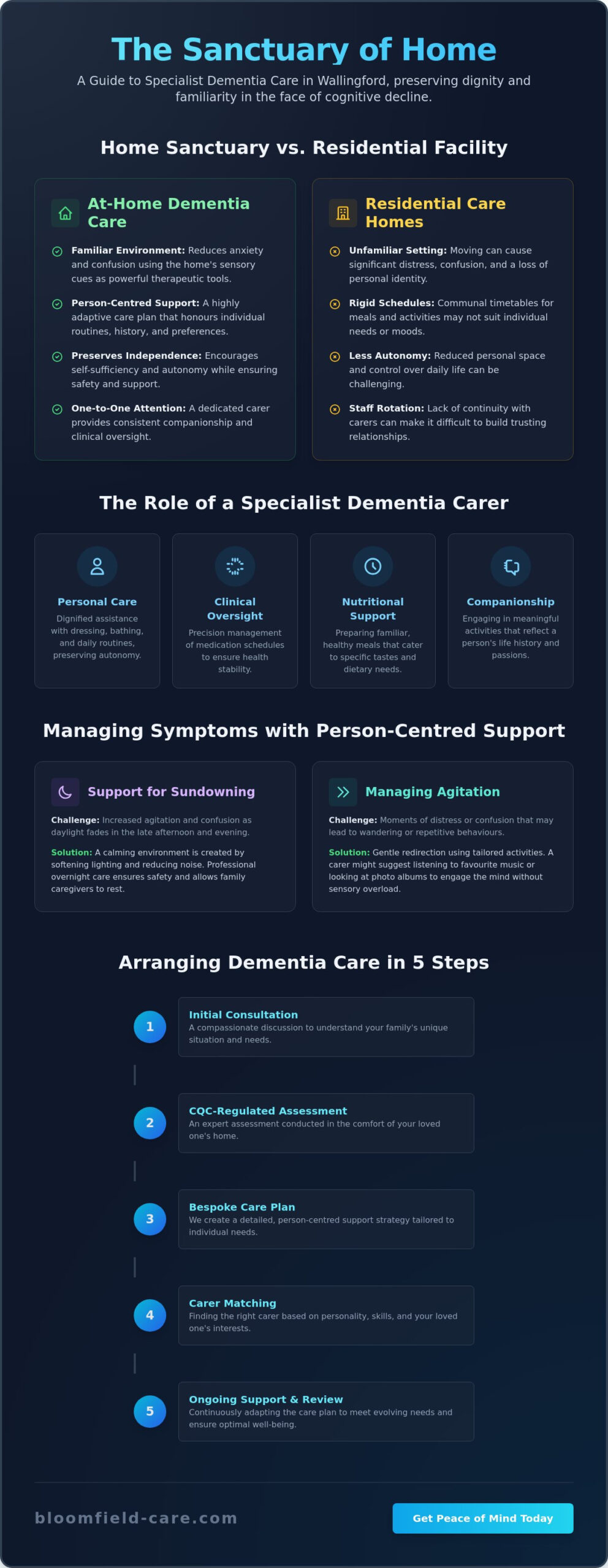
Specialist dementia care at home Wallingford is far more than a simple visiting service. It’s a highly adaptive form of professional support that changes in rhythm with the individual’s needs. While general elderly care often focuses on physical tasks, dementia-specific support prioritises cognitive wellness and emotional security. It transforms a private residence into a managed sanctuary where routines are sacred and memories are respected. Many families in our local community are now moving away from the traditional care home model. They’ve found that bespoke, home-based solutions offer a level of continuity that a communal facility simply cannot match.
The Role of a Specialist Dementia Carer
A specialist carer serves as a dedicated partner in your loved one’s daily life. They don’t just manage symptoms; they nurture the person behind the diagnosis. This involves a delicate balance of providing essential assistance while encouraging as much self-sufficiency as possible. Their role includes:
- Personal Care: Assisting with dressing or bathing in a way that protects the individual’s dignity and autonomy.
- Clinical Oversight: Managing medication schedules with precision to ensure health stability.
- Nutritional Support: Preparing familiar, healthy meals that cater to specific tastes and dietary requirements.
- Companionship: Effective Dementia caregiving relies on understanding a person’s life history. Carers engage in meaningful activities that reflect the individual’s long-term interests and passions.
Preserving Identity Through Familiar Surroundings
Choosing dementia care at home Wallingford allows for a level of environmental consistency that is medically beneficial. For those living with cognitive decline, the environment is a powerful therapeutic tool. Staying in a home near the River Thames or within walking distance of Wallingford’s historic parks provides vital sensory anchors. These familiar sights and sounds help maintain a sense of place that is often lost in a new environment.
When a person remains in their own home, they are surrounded by the “sensory cues” that trigger comfort. The specific creak of a floorboard, the view of a well-tended garden, or the smell of their favourite tea can all work together to reduce anxiety and confusion. By supporting the “whole person” in this way, we ensure that their identity remains the focus, rather than the symptoms of memory loss. This approach empowers individuals to feel safe, recognised, and truly at home in their own sanctuary.
Managing Dementia Symptoms with Person-Centred Support
Living with dementia often brings unpredictable challenges that require more than just a watchful eye. Symptoms like wandering or sundowning can create significant stress for families, but a structured approach can transform the daily experience. By focusing on a person-centred model, we ensure that every intervention is tailored to the individual’s specific history and current emotional state. This is why dementia care at home Wallingford is so effective; it allows for the creation of a consistent daily rhythm that reduces confusion and provides a steady sense of comfort. By choosing dementia care at home Wallingford, families gain access to specialist techniques that are often unavailable in general support settings.
Instead of the rigid schedules found in many communal settings, home-based support uses gentle redirection to manage distress. If a loved one becomes agitated, a carer might suggest one of many tailored dementia activities that resonate with their past hobbies, such as listening to a specific genre of music or looking through a familiar photo album. This keeps the mind engaged without the sensory overload that often occurs in group environments. Understanding the nuances of dementia stages helps us adapt these interactions as needs evolve.
Support for Sundowning and Nighttime Confusion
The late afternoon and evening can be a particularly vulnerable time for those with memory loss. Agitation often increases as the light fades, a phenomenon known as sundowning. We focus on calming the environment by softening the lighting and reducing background noise to help your loved one feel secure. For many families, the strain of broken sleep is the hardest part of caregiving. In these cases, overnight care provides a professional presence to ensure safety during the night. It allows you to rest while knowing your parent is safe in their own bed, maintaining the sanctuary of their home.
Effective Communication and Emotional Reassurance
Meaningful connection often requires moving beyond logic and entering the reality of the person living with dementia. Our carers use validation therapy and active listening to acknowledge the emotions behind the words, even when the context is confused. By recognising non-verbal cues, such as a change in posture or facial expression, we can provide reassurance before a situation escalates into distress. Person-centred care is a dedicated partnership between the carer, the client, and the family. When you are ready to explore your options, Arranging dementia care through official channels and professional providers ensures a foundation of safety and expertise.
If you’re noticing that your current routine is becoming difficult to manage, our dedicated team is here to provide the professional reassurance your family needs.
Domiciliary Care vs. Residential Care Homes in Wallingford
While some providers highlight luxury bistros and communal cinemas, they often overlook the emotional weight of leaving a lifelong sanctuary. Choosing dementia care at home Wallingford means your loved one doesn’t have to trade their personal history for a room in a communal corridor. In a residential facility, staffing ratios are shared among many residents, which can lead to a task-based approach to support. Conversely, domiciliary care provides a dedicated one-to-one relationship where the carer’s sole focus is your family member’s well-being and safety. Families often worry if staying at home is as safe as a managed facility. However, with professional one-to-one monitoring, the risks of falls or wandering are often managed more effectively than in busy wards where staff attention is divided.
The financial aspect is also a significant consideration for families. When you evaluate the cost of home care against Wallingford’s residential fees, the value of bespoke support becomes clear. You aren’t just paying for a bed; you’re investing in a tailored lifestyle that preserves your loved one’s dignity. This model of support ensures that the individual remains the author of their own daily routine, rather than fitting into the institutional schedule of a large care home.
The Benefits of One-to-One Attention
Bespoke domiciliary care allows for a level of personalisation that is simply impossible in a group setting. We believe in matching carers to clients based on more than just clinical needs. We look at personalities, shared hobbies, and local Wallingford connections. This builds a foundation of trust and friendship. By following professional dementia home care guidance, our carers provide cognitive stimulation that is specifically designed for the individual. This one-to-one focus also means your loved one can maintain their existing relationships with local GPs and community groups without the disruption of a move.
Maintaining Independence and Community Links
Independence is rooted in the small choices we make every day. Home care supports the right to choose when to wake up, what to eat, and when to socialise. For many, staying in Wallingford means they can still enjoy familiar outings, such as a visit to the Wallingford Museum or attending local coffee mornings with friends. The psychological impact of keeping a private front door and a personal garden cannot be overstated. It reinforces a sense of self and belonging. By staying in their own home, your loved one remains an active part of the community they’ve known for years, rather than being isolated within a residential environment.
How to Arrange Dementia Care in Wallingford: A 5-Step Guide
Moving from family-led support to professional assistance is a significant transition that deserves a gentle, structured approach. The process of arranging dementia care at home Wallingford begins with recognition. You might notice small changes, such as missed appointments, uncharacteristic confusion during evening hours, or concerns about physical safety in the kitchen. These signs indicate that your loved one’s sanctuary needs a little more support to remain safe. Once you’ve identified these needs, the next step is reaching out to a CQC-regulated agency. They will conduct a comprehensive care needs assessment to ensure the support provided aligns with national safety and quality standards.
The third step involves understanding the financial landscape. Navigating funding home care in Oxfordshire is a priority for many families. As of 2026, the upper capital threshold for local authority funding in England is £23,250. If your loved one’s assets exceed this amount, they will typically be expected to self-fund their care. Following this, we work with you to build a bespoke care plan. This isn’t a clinical document; it’s a living guide that integrates our support with your existing family routines. Finally, we implement a trial period. This is a sensitive time that allows the relationship between the carer and your loved one to grow naturally, ensuring a seamless and stress-free transition for everyone involved.
Conducting a Home Safety Assessment
Creating a safe environment is about more than just removing obstacles. We evaluate the home for trip hazards like loose rugs and ensure that lighting is bright and consistent to reduce shadows, which can often cause distress for those with memory loss. Clear, dementia-friendly signage on doors can also provide a quiet sense of direction. For families preparing for a live-in carer, we help you think about how to prepare a comfortable space that allows the carer to become a supportive, discreet part of the household. We also explore how simple technology, such as fall sensors, can provide an extra layer of protection without feeling intrusive.
Understanding Local Support and Funding
Oxfordshire County Council is your primary point of contact for financial assessments and local authority-funded pathways. Even if you don’t qualify for financial support, the council can provide guidance on the local care market. Beyond formal care, Wallingford has a wonderful network of community support. Local dementia cafes and support groups offer a space for families to connect and share experiences. These community links provide essential emotional respite and help you feel less alone on this journey. If you’re ready to take the first step toward professional support, you can book a care needs assessment with our compassionate team today.
Why Families Trust Bloomfield Care for Dementia Support
At Bloomfield Care, we believe that the highest standard of support is found where clinical excellence meets the heart of a family home. Our commitment to providing dementia care at home Wallingford is rooted in the belief that every individual deserves to be treated with the same patience and integrity we would offer our own relatives. While large national agencies often focus on scale and logistics, we prioritise the “Bloomfield Difference.” This is a community-focused approach that values human connection and the sanctity of your loved one’s lifestyle above all else. We bridge the gap between necessary clinical safety and the essential sanctuary of domestic life, ensuring your family member feels empowered rather than just managed.
Our Oxfordshire-based carers undergo rigorous vetting and specialist dementia training to ensure they’re equipped for the complexities of memory loss and cognitive decline. They aren’t just healthcare providers; they’re dedicated companions who understand how to nurture mental well-being and autonomy. By focusing on the “whole person,” we ensure that the care provided is as unique as the individual receiving it. This highly personalised service allows us to maintain a domestic environment that feels safe, familiar, and full of life.
A Regulated and Reliable Service
Choosing a provider is a decision of profound trust. As a CQC-regulated service, we adhere to high-quality standards that ensure our support is safe, effective, and responsive to changing needs. You won’t be dealing with a distant corporate entity; our local branch management consists of real people you can talk to right here in Oxfordshire. We don’t believe in static care plans that sit on a shelf. Instead, we provide continuous monitoring and regular reviews, adapting our support as your loved one’s needs evolve. This rhythmic steadiness provides a sense of stability for the whole family during what can be an uncertain time.
Take the First Step Toward Peace of Mind
Taking the first step toward professional support can feel daunting, but it’s often the key to restoring peace of mind for everyone involved. We invite you to book a free, no-obligation care assessment in Wallingford to explore how we can help. During our first visit to your family home, we listen more than we speak. We’ll discuss your specific anxieties, from concerns about nighttime confusion to the desire for meaningful companionship, and explain how our services can be tailored to your situation. It’s an unhurried, supportive process designed to give you clarity and confidence without any pressure. Contact our Wallingford team today to discuss your dementia care needs.
Empowering Your Family with Compassionate Support
Choosing a path for a loved one’s memory loss is a journey of deep love and responsibility. We’ve explored how keeping a parent in their own sanctuary preserves their identity while managing symptoms like sundowning through professional, person-centred support. By opting for dementia care at home Wallingford, you’re choosing a model that prioritises one-to-one attention and respects the sacred routines of a private residence. This approach doesn’t just manage a condition; it enhances the quality of daily life in the community your family knows best.
As a CQC regulated and inspected provider, we offer the reassurance of specialist dementia-trained local carers and bespoke care plans that evolve with your needs. You don’t have to navigate these complexities alone. Our team is here to provide the stability and professional safety your family deserves. To begin this partnership, you can Request a Free Dementia Care Assessment in Wallingford. We’ll listen to your story and help you create a future rooted in comfort, dignity, and genuine kindness. Your loved one’s comfort is our greatest priority, and we’re ready to support you every step of the way.
Frequently Asked Questions
What is the difference between dementia care and standard home care?
Dementia care focuses on cognitive support and memory-specific strategies rather than just physical tasks. Standard home care might involve help with shopping or cleaning, but dementia support involves validation therapy and managing sensory environments to reduce anxiety. It requires carers who are specially trained to understand the neurological changes behind certain behaviours, ensuring that every interaction prioritises the individual’s mental well-being and dignity.
Can dementia care at home in Wallingford prevent a move to a care home?
Yes, specialist dementia care at home Wallingford is specifically designed to provide the level of monitoring and support needed to avoid institutional settings. By creating a managed sanctuary within the private residence, we address safety concerns and complex needs that families often feel require a residential facility. This allows your loved one to remain in their familiar community and stay connected to their personal history for as long as possible.
Is home care safe for someone who wanders during the night?
Home care can be exceptionally safe for those prone to wandering, particularly when overnight or live-in care is utilised. A professional presence ensures that any nighttime confusion is met with gentle redirection and immediate assistance. We also help families implement discreet safety technology, such as door sensors or fall monitors, which provide security without compromising the domestic feel of the home or the person’s autonomy.
How much does dementia care at home cost in Oxfordshire?
Costs for care in the region are typically based on the level of support required and the duration of the visits. While we don’t provide fixed rates without a personal assessment, industry data suggests that hourly rates in Oxfordshire reflect the high standard of specialist training required for cognitive support. Families should also consider the difference between visiting domiciliary care and the weekly cost of a live-in carer when planning their long-term budget.
Will my parent have the same carer every day?
We strive for maximum continuity because we know that familiarity is vital for those living with memory loss. While it isn’t always possible to have the same individual every single day due to essential rest requirements, we build a small, dedicated team around your loved one. This ensures they only interact with a few trusted faces who understand their specific history, preferences, and daily routines, fostering a sense of profound reassurance.
How do you handle sundowning and agitation in the evenings?
Our carers use person-centred techniques to calm the environment as evening approaches, focusing on soft lighting and familiar sensory cues. We avoid confrontation and instead use gentle redirection toward soothing activities, such as listening to favourite music or engaging in a light hobby. This approach addresses the emotional distress behind the agitation, helping the individual feel secure and comfortable as the day ends and the light fades.
Can I get financial help for dementia care from Oxfordshire County Council?
Financial assistance is available through Oxfordshire County Council for those who meet the national eligibility criteria and capital thresholds. If your loved one’s assets are below £23,250, they may be eligible for local authority-funded support. We recommend requesting a financial assessment from the council to understand your specific entitlement, whether you are self-funding or seeking public assistance to manage the costs of professional care.
How quickly can dementia care be started in Wallingford?
The start time for dementia care at home Wallingford depends on the complexity of the needs and the results of the initial care assessment. We aim to move as efficiently as possible once the assessment is complete, as we understand the urgency families often feel when a situation changes. Our focus is on ensuring a safe and thoughtful match between the client and their carer to guarantee a stable relationship from the very first day.