Compassionate Live-in Dementia Care in Oxfordshire: A 2026 Guide for Families
Imagine waking up at 3 AM, not to your own alarm, but to the nagging fear that your father might have wandered out of his front door in Witney. It’s an exhausting reality for many families who find themselves “parenting” their own parents, struggling to balance deep love with the constant anxiety of night-time safety and medication schedules. You likely feel that a care home is the only way to keep them safe, even if the thought of moving them from their cherished home feels like losing another piece of who they are. Finding reliable live-in dementia care Oxfordshire services means you don’t have to make that heartbreaking compromise.
We understand that the transition from being a daughter or son to a primary caregiver is emotionally taxing and often confusing. This guide shows you how specialist live-in care allows your loved one to remain in their familiar sanctuary while receiving expert, one-on-one support that adapts to their specific needs. We’ll explore the latest 2026 local support options, the benefits of having a consistent professional in the home rather than a rotation of staff, and how to ensure your parent remains engaged and dignified in the place they love most.
Key Takeaways
- Discover how maintaining a familiar home environment acts as a sanctuary, reducing confusion and providing emotional stability for those living with dementia.
- Learn why the 1:1 support of live-in dementia care Oxfordshire offers a safer, more attentive alternative to the higher staff-to-resident ratios found in local care homes.
- Understand how professional support evolves alongside your loved one, from providing companionship in early stages to managing complex needs as the condition progresses.
- Explore the steps to finding a perfect match, ensuring your family’s new carer aligns with your parent’s personality, hobbies, and clinical requirements.
- Gain peace of mind by learning how person-centred care prioritizes dignity and independence, allowing your loved one to lead a fulfilling life at home.
What is Specialist Live-in Dementia Care in Oxfordshire?
Specialist live-in dementia care is a deeply personal service where a professional carer moves into your loved one’s home to provide constant, around-the-clock support. It’s a partnership that goes far beyond basic supervision. For many families in our county, live-in dementia care Oxfordshire has become the preferred alternative to residential settings because it preserves the individual’s dignity and their connection to their life story. While a care home requires a person to adapt to a new, often rigid environment, live-in care adapts entirely to the person. With over 6,000 residents in our county currently living with a diagnosis, the need for tailored, local support has never been greater.
When families first ask what is dementia?, they’re often looking for more than a medical definition. They’re looking for a way to manage the changing personality and needs of a parent without losing the essence of who that person is. Specialist support differs from general companionship because it involves specific training in managing memory loss, communication challenges, and the complex behaviours that can arise. It ensures that the person’s home remains a sanctuary rather than a place of confusion.
The Core Components of 24/7 Home Support
The support provided is comprehensive, covering every aspect of daily life. This includes personal care delivered with the utmost respect for your loved one’s privacy and history. Nutrition and medication management are handled with professional precision, ensuring that the common risks of dehydration or missed doses are mitigated. Beyond these physical needs, the focus remains on emotional well-being. Carers provide cognitive stimulation through shared activities that are familiar and comforting, rather than clinical exercises. It’s about life quality, not just task management.
Why Familiarity is the Best Medicine for Dementia
Staying at home is often the most effective way to reduce “sundowning,” the period of increased confusion and agitation that often occurs in the late afternoon. In a familiar setting, the sights, sounds, and even the smells of a home act as an anchor. Whether it’s the specific light in a Wallingford garden or the morning routine of watching the birds from a favourite armchair in Oxford, these small details provide immense comfort. This “rhythm of home” helps maintain a sense of self-sufficiency. It also ensures that social links with Oxfordshire neighbours and the local community remain intact, preventing the isolation that can sometimes occur in a care home environment. Choosing live-in dementia care Oxfordshire allows your loved one to stay connected to their history while receiving the expert safety they deserve.
Adapting Care to the Different Dementia Stages
Dementia isn’t a static condition. It’s a journey that requires a care plan as fluid and responsive as the symptoms themselves. One of the greatest benefits of live-in dementia care Oxfordshire is the ability for a single, familiar carer to adapt their approach as the months and years pass. They become more than just a helper; they are a witness to your loved one’s history, adjusting their support from light companionship to intensive personal care without the trauma of moving to a new facility. This continuity of care is vital for emotional stability, ensuring that as the world becomes more confusing for the individual, their support system remains a steady, comforting presence.
Supporting Independence in Early Diagnosis
In the early stages, the primary goal is often to maintain “normal” life for as long as possible. This might mean a carer accompanying your mother for a coffee in Abingdon or a stroll through Oxford city centre to keep her socially active and connected to her community. It’s about subtle support that respects her autonomy while quietly managing the small lapses in memory that can cause frustration. We focus on building a person-centred care plan that identifies what she can still do, rather than just what she can’t, fostering a sense of purpose and self-worth.
Expert Management of Complex Symptoms
As the condition moves into the middle stages, challenges like wandering, increased confusion, or “sundowning” can become more frequent. A live-in carer uses gentle de-escalation techniques to soothe anxiety, often using familiar music or shared memories to ground the individual. They also get creative with nutrition and hydration, perhaps turning a meal into a familiar social ritual to encourage eating when appetite wanes. This stage is about living well with dementia by creating a safe, predictable environment. Safety monitoring becomes a quiet, background presence that prevents falls and wandering while allowing your parent to move freely within their own sanctuary.
In the later stages, the focus shifts toward specialist palliative support and intensive personal care. This is delivered with profound dignity, ensuring your loved one remains comfortable, well-medicated, and never alone. By staying at home, they remain surrounded by the scents and sounds of their life, which provides a level of comfort that a clinical setting simply cannot replicate. If you’re feeling overwhelmed by a recent diagnosis, exploring our dedicated dementia care options can help you understand how we support families through every transition.
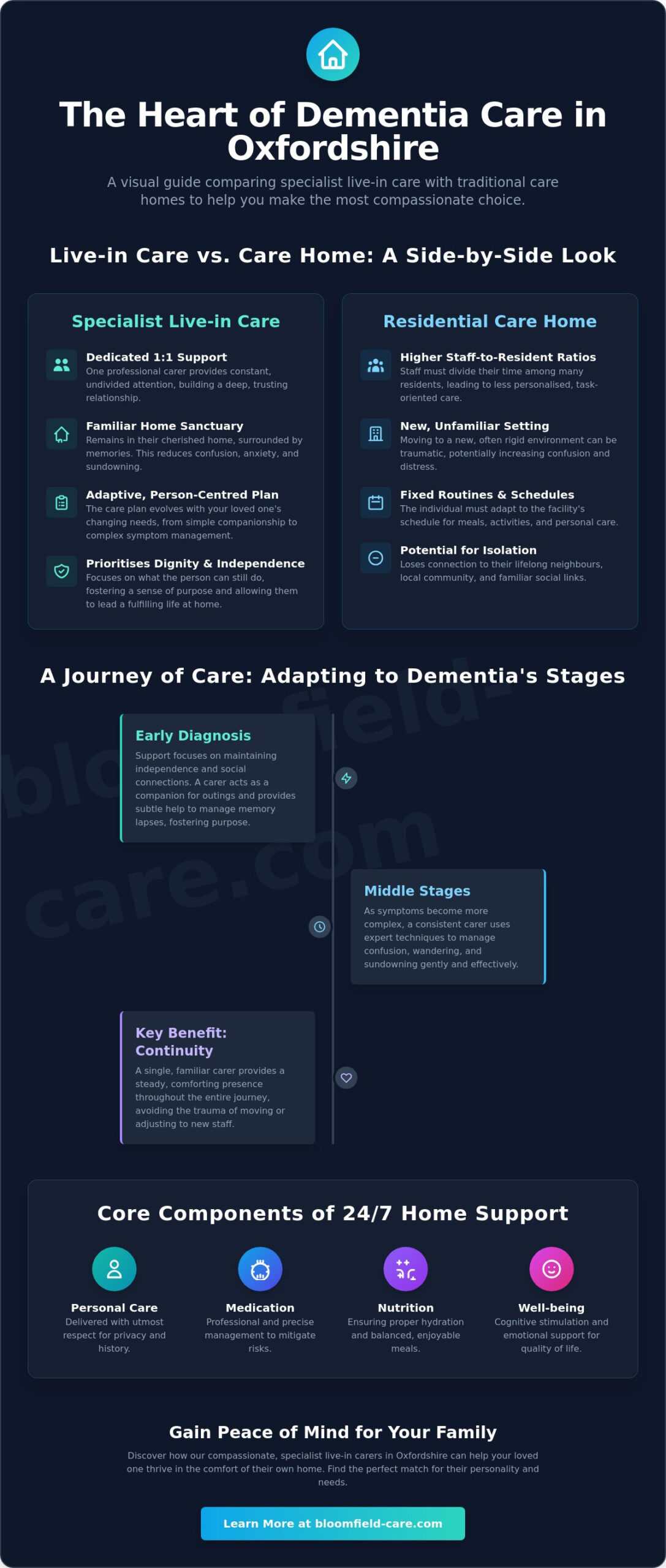
Home Care vs. Oxfordshire Care Homes: A 2026 Comparison
Choosing between a residential facility and staying at home is often the most difficult decision a family faces. In a care home, the staff-to-client ratio is typically 1:4 or even higher; this means attention is divided among many residents with competing needs. With live-in dementia care Oxfordshire, your parent benefits from a dedicated 1:1 ratio. This level of focus allows for a deep, consistent bond to form between the carer and the individual, rather than a rotating shift of staff who may only know your loved one’s medical chart. It’s about having a familiar face who knows exactly how your father likes his tea or which stories make your mother laugh.
Home is more than a building. It’s a sanctuary filled with pets, familiar furniture, and private gardens. For a person with dementia, these anchors are vital. Removing them can cause significant distress and confusion. For couples, live-in care is often more cost-effective than paying for two separate beds in a residential home. With care home fees in 2026 averaging £1,298 per week for residential care and over £1,500 for nursing support, the financial benefit of keeping a couple together in their own home is clear. It preserves their shared life while ensuring both receive the specialized attention they require.
The Emotional Impact of Transition
Moving a parent can lead to “transfer trauma,” a period of intense stress that often accelerates cognitive decline. Staying at home avoids this upheaval entirely. There’s also evidence that 1:1 care can reduce the need for antipsychotic medication by providing the constant reassurance and engagement that busy residential staff may not have time to offer. You can read more about this choice in our guide on Bloomfield Care Home or Care at Home? to see which path fits your family’s needs best.
Logistics and Flexibility
Life in a residential home often follows a rigid timetable. Breakfast is served at a set time, and walks are scheduled around staff availability. At home, your loved one keeps total control. They wake up when they choose and eat the exact meals they’ve enjoyed for decades, prepared just the way they like. There are no restrictive visiting hours for grandchildren or friends, keeping the home a vibrant part of the community. For more official guidance on navigating these choices, the NHS dementia care and support website provides a helpful overview of local services and support frameworks.
Arranging Live-in Care Across Oxfordshire: Local Logistics
Setting up live-in dementia care Oxfordshire isn’t just a logistical exercise; it’s the start of a partnership that protects your parent’s lifestyle. The process begins with a detailed care needs assessment. We don’t just look at medical charts. We visit homes in places like Wallingford, Abingdon, and the heart of Oxford to understand the physical environment and the small routines that make your loved one feel safe. This assessment is a collaborative effort. We often work alongside local memory clinics and Oxfordshire GPs to ensure our care plan aligns with clinical requirements while remaining firmly person-centered. It’s about listening to what your parent needs to feel secure in their own space.
Finding the right carer is about more than just matching skills. It’s about finding a personality that clicks. If your father loves discussing local history or your mother enjoys tending to her pots in a North Oxford garden, we look for a carer who shares those interests. This helps the carer become a natural part of the household rather than an intruder. You can find more detail on financial planning in our guide to the cost of home care in Oxfordshire, which outlines how to budget for this specialized support.
Local Assessments in Wallingford, Abingdon, and Oxford
Our home visits are thorough and gentle. We identify where simple safety adjustments can be made without turning the house into a clinical facility. We coordinate with local healthcare professionals to ensure a seamless transition from hospital or clinic to home. This local focus means we understand the specific resources available in your community, from the best pharmacies in Abingdon to local support groups in Wallingford. We’re here to guide you through every step, ensuring you never feel like you’re navigating the system alone.
Preparing the Sanctuary: Home Safety and Carer Comfort
Your parent’s home must remain a sanctuary, but it may need some gentle modifications. Simple changes, like improved lighting in hallways or removing trip hazards like loose rugs, can significantly reduce the risk of falls. For the carer, having a private, comfortable room and reliable WiFi is essential. This isn’t just about their comfort; it’s about ensuring they have the space to recharge so they can provide the highest quality of care. A well-rested carer is a more patient and attentive companion.
Introducing a new person into the family home can feel daunting. We suggest a trial period to see how the dynamic develops. It’s normal to feel a bit of anxiety during the first few days, but a professional carer manages this transition with grace and quiet observation. They’ll slowly integrate into the household’s rhythm, respecting boundaries while providing the constant reassurance your parent needs. If you’re ready to see how this could work for your family, we invite you to explore our live-in care services to start the conversation.
The Bloomfield Difference: Compassionate Dementia Specialists
At Bloomfield Care, we believe that providing live-in dementia care Oxfordshire is about more than managing symptoms. It’s about preserving a person’s essence. Our team is trained to see the individual behind the diagnosis, ensuring their daily life remains filled with the small joys that make it worth living. We bridge the gap between clinical excellence and the warmth of a family home, creating a partnership where safety and dignity coexist. This person-centred approach ensures that your loved one doesn’t just receive care; they receive the respect and autonomy they deserve.
The first 48 hours of any new care arrangement are often the most delicate. We understand the anxiety of welcoming someone new into your private residence. Our carers are trained to spend these initial hours as quiet observers. They learn the specific “language” of your home before stepping into a more active role. They respect the boundaries of your sanctuary, ensuring the transition feels like a gentle shift rather than a sudden intrusion. This period is about building trust, both with the individual and with you, ensuring the carer integrates seamlessly into the household rhythm.
We recognize that dementia affects the whole family. The emotional weight of “parenting” a parent is immense. Our “Family Partnership” approach means we’re here to support you just as much as your loved one. We provide the professional reassurance that your parent is well-fed, safe, and engaged. This allows you to return to your role as a daughter or son. Our carers are prepared for complex cases, including specialized Alzheimer care, ensuring that even as needs grow, the support remains consistent and compassionate.
Why Oxfordshire Families Trust Bloomfield Care
Our commitment to dignity and autonomy is at the heart of everything we do. We don’t just provide a service; we build a community of support centered on mental well-being. Consistent communication is a cornerstone of our work. We keep families updated and reassured, so you never have to wonder how a night went or if a meal was enjoyed. You’re always part of the conversation. You can learn more about our compassionate live-in care services and how they are tailored to the unique landscape of our county.
Taking the First Step Toward Reassurance
Deciding on the right support is a significant moment. We offer a free, no-obligation care assessment in your Oxfordshire home to help you explore the possibilities. During this consultation, we encourage you to ask about our carer matching process, our specific training for complex dementia, and how we handle changes in routines. It’s an opportunity for us to listen to your story and for you to feel the warmth of our professional approach. If you’re ready to find a safe, supportive sanctuary for your parent, speak with our friendly Oxfordshire team today to begin this journey together.
Preserving the Rhythm of Home with Expert Support
Navigating a dementia diagnosis is a journey that no family should have to walk alone. Choosing live-in dementia care Oxfordshire ensures your parent remains in the sanctuary they love, surrounded by the memories that define them. You’ve seen how specialized 1:1 support provides a level of safety and personal connection that traditional residential settings often struggle to match. By keeping local routines intact and adapting care as needs evolve, you aren’t just managing a condition; you’re actively enhancing your loved one’s quality of life.
Our CQC registered and inspected service is built on a foundation of dignity and respect. With specialist dementia-trained carers and a local Oxfordshire management team, we provide the professional oversight needed to keep your parent well-fed, safe, and truly seen. It’s time to step back from the exhausting role of primary caregiver and return to being a daughter or son again. We’re here to listen and help you find the best way forward for your family.
Request a Compassionate Care Assessment in Oxfordshire Today
You can feel confident that a safe, supportive future is possible right where your parent belongs, in the comfort of their own home.
Frequently Asked Questions
How much does live-in dementia care cost in Oxfordshire compared to a care home?
Live-in care is often comparable in price to a high-quality residential care home, but it offers significantly better value for couples. When two people live together at home, they pay for one carer rather than two separate rooms in a facility. This approach also removes the hidden emotional costs of “transfer trauma” and the logistical burden of selling a family home to fund residential fees.
Does the live-in carer need their own room and what are their break requirements?
A live-in carer requires a private, furnished bedroom and access to WiFi to stay connected with their own family. To ensure they remain patient and attentive, they also need a daily break of two hours. If your parent cannot be left alone during this time, we can help you arrange short-term domiciliary care or a local visitor to provide seamless cover while the carer rests.
What happens if our live-in carer is ill or goes on holiday?
We manage all holiday and sickness cover so your loved one’s support is never interrupted. When a regular carer takes a break, we introduce a relief carer who has been fully briefed on your parent’s routines, likes, and clinical needs. This ensures the “rhythm of home” remains steady. You don’t have to worry about managing rotas or finding last-minute replacements yourself.
Can a live-in carer help if my parent wakes up frequently during the night?
Live-in carers provide essential reassurance during the night, helping to guide your parent back to bed if they become disoriented or need to use the bathroom. This presence is particularly helpful for managing “sundowning” symptoms. If night waking becomes constant and requires intensive support, we can discuss adding a night-time specialist to ensure the primary carer remains well-rested and focused during the day.
Is live-in care suitable for someone with advanced Alzheimer’s?
Live-in care is highly suitable for advanced Alzheimer’s because it prioritizes a familiar, low-stress environment. For someone in the later stages, the move to a clinical setting can be deeply confusing and distressing. Our specialist carers are trained to provide intensive personal care and emotional grounding, ensuring your loved one stays safe and comfortable in the sanctuary of their own home throughout their journey.
How do you ensure the carer is the right ‘personality match’ for my parent?
We believe the bond between the carer and the individual is the heartbeat of successful care. During our initial assessment, we learn about your parent’s temperament, history, and hobbies. We then suggest carers who share similar interests, whether that’s a love for local Oxfordshire history or a passion for gardening. This ensures the carer feels like a natural, welcome addition to the household.
What training do Bloomfield carers receive specifically for dementia?
Our carers undergo rigorous, specialist training that focuses on communication techniques, de-escalation, and nutritional support for memory loss. This preparation ensures they understand the clinical nuances of the condition while maintaining a gentle, person-centered approach. By choosing live-in dementia care Oxfordshire, you’re accessing professionals who prioritize dignity and autonomy, helping your loved one feel empowered rather than just managed.
Can we start with a short-term trial of live-in care?
We often recommend starting with a short-term trial to allow everyone to adjust to the new arrangement. This period is a gentle way to introduce support without the pressure of a long-term commitment. It gives your parent time to build trust with their carer and allows our team to refine the care plan based on real-world observations. It’s the best way to ensure the match is perfect.