Compassionate Dementia Home Help in Thatcham: A Guide for Local Families
What if supporting a loved one with memory loss wasn’t about managing a slow decline, but about creating a therapeutic sanctuary within their own four walls? When searching for dementia home help Thatcham families often struggle with a heavy sense of guilt, worrying they can’t provide enough support alone. You might fear for their safety near busy local roads or feel anxious that a new face will disrupt their familiar routine. These feelings are valid; they reflect your commitment to keeping your loved one safe, happy, and respected in the place they know best.
This guide explores how specialist home care can preserve your loved one’s independence and dignity in the comfort of their own home. By choosing professional live-in care or domiciliary care, you can establish a stable environment that prioritizes both mental well-being and physical safety. We’ll show you how expert companionship and tailored elderly care provide a level of support that feels like family, giving you the peace of mind that comes from knowing every detail is managed with genuine kindness.
Key Takeaways
- Understand how familiar surroundings and environmental memory help your loved one navigate their day with greater confidence and less anxiety.
- Learn how to introduce support using a companionship first approach that prioritizes genuine human connection over simple task-based care.
- Evaluate the differences between flexible hourly visits and the dedicated support of live-in dementia home help Thatcham families use for continuous safety.
- Discover how person-centered care empowers individuals to maintain their dignity and autonomy while remaining in the sanctuary of their own residence.
What is Dementia Home Help and How Does it Support Thatcham Residents?
Understanding What is Dementia Home Help starts with a simple shift in perspective. It isn’t just about someone coming into the house to perform chores; it’s a deeply personal service designed to support a person’s cognitive health and emotional security. In our local community, dementia home help Thatcham provides a vital bridge between a medical diagnosis and a lived reality where your loved one still feels like themselves. This approach moves away from rigid, task-based care and moves toward relationship-led companionship. It’s about finding a carer who understands that a cup of tea isn’t just a drink. It is a moment of connection and a familiar anchor in a changing world.
For families in West Berkshire, this specialized support acts as a trusted advisor. Professional carers don’t just assist the individual; they support the whole family unit. They listen to your concerns, share insights on behavior changes, and help you navigate the complexities of memory loss with patience. It’s a partnership that values the individual’s history and their place within our local community, ensuring that life remains as stable and predictable as possible.
The Difference Between General Home Care and Specialist Dementia Support
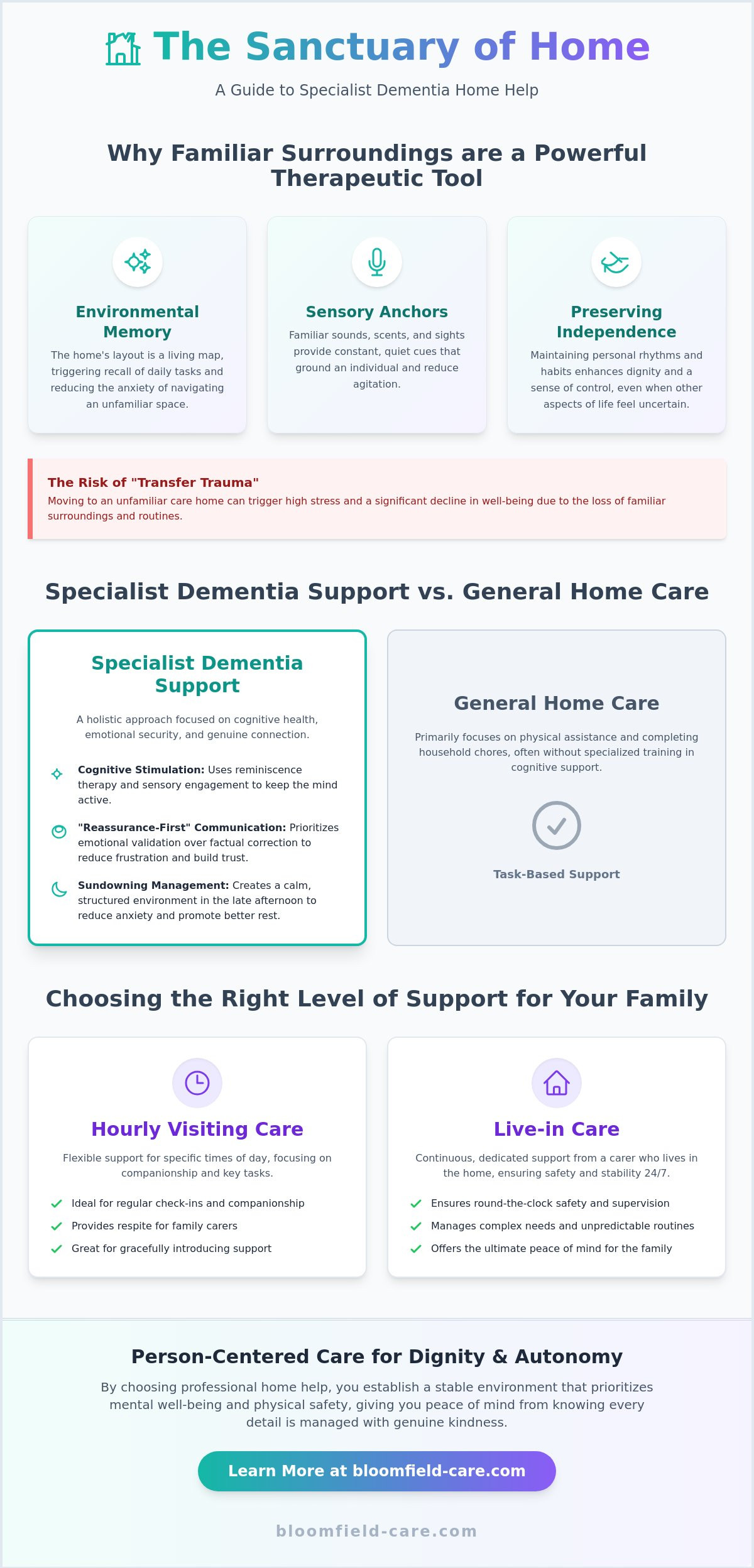
Specialist support goes far beyond physical assistance. Carers utilize specific cognitive stimulation techniques, such as reminiscence therapy or sensory engagement, to keep the mind active and engaged. They use a “reassurance-first” communication style. This style prioritizes emotional validation over factual correction, which is essential for reducing frustration. This expertise is particularly vital when managing “sundowning,” a period of increased confusion in the late afternoon. By creating a calm, structured environment during these hours, carers help reduce anxiety and promote better rest.
Why Thatcham Families are Choosing Home Support Over Residential Care
Many families find that staying at home offers a profound psychological advantage. A private residence is a sanctuary filled with “environmental memory.” The feel of a specific banister or the light hitting a certain chair helps someone with dementia navigate their world without constant conscious effort. Moving to a care home can sometimes trigger “transfer trauma,” a state of high stress that often leads to a decline in well-being due to the loss of familiar surroundings.
By choosing dementia home help Thatcham, your loved one maintains their connection to the town they know. Whether it’s a gentle walk past St Mary’s Church or a quiet afternoon observing the bustle of Thatcham Broadway, these local landmarks provide essential sensory cues. They reinforce a sense of belonging that a clinical facility cannot replicate. Staying home allows life to continue in a way that feels normal, safe, and deeply dignified.
The Sanctuary of Home: Why Familiar Surroundings Matter for Dementia
A home is much more than four walls and a roof. For someone living with memory loss, it is a living map of their personal history. This is often referred to as environmental memory, a concept where the physical layout of a room helps trigger the brain’s recall of daily tasks. It’s the reason why a person might struggle to find the bathroom in a new facility but can navigate their own hallway in the dark. By utilizing dementia home help Thatcham families can transform a private residence into a powerful therapeutic tool. This familiar space provides constant, quiet cues that ground an individual, reducing the profound agitation that often comes when surroundings feel alien.
Sensory familiarity plays a vital role in this process. The specific creak of a floorboard, the scent of lavender in the garden, or the way the afternoon sun hits the living room rug all serve as anchors. According to the NHS guide to dementia, confusion is a core symptom that can be exacerbated by sudden changes. Staying in a sanctuary where every object has a story helps maintain a sense of self. It allows the individual to feel in control of their world, even when other aspects of their life feel uncertain.
Preserving Independence Through Routine
Independence isn’t about doing everything alone. It’s about having the agency to follow one’s own rhythm. A dedicated carer focuses on supporting existing habits rather than imposing a new, clinical schedule. Perhaps it’s a specific morning ritual in a sunlit Thatcham kitchen, where the radio is always tuned to the same station and the tea is made in a favorite mug. These small details are the building blocks of dignity. To better understand how these routines evolve over time, you can read our guide on understanding dementia stages.
Adapting the Home Environment Safely
Many homes in Thatcham have unique architectural charms, but older properties sometimes present navigation challenges. Specialist dementia home help Thatcham involves making subtle, non-clinical adjustments to keep the sanctuary safe. This might include using clear signage on doors or installing high-contrast lighting to define different spaces. Even the garden can be adapted into a safe sensory haven, ensuring your loved one can enjoy the fresh air without risk. If you are feeling overwhelmed by these changes, our team can offer a gentle hand in creating a safer home environment.
Hourly Visiting Care vs. Live-in Care: Which is Right for Your Family?
Choosing the right level of support is a significant milestone for any family. It involves balancing your loved one’s desire for independence with the practical need for safety and professional assistance. For many families, the decision falls between flexible hourly visits and the dedicated presence of a live-in carer. Each option offers unique benefits depending on the stage of memory loss and the specific rhythm of your household. While hourly care provides a wonderful way to maintain a sense of autonomy, live-in care offers a level of security that’s often essential as needs become more complex.
Continuity is the cornerstone of effective dementia support. People living with cognitive changes often find comfort in predictable faces and routines. While visiting care can be structured around specific times, live-in care provides the ultimate continuity. The carer becomes a natural part of the home environment, learning the subtle nuances of your loved one’s personality and preferences. When evaluating the cost of home care in Oxfordshire and Dorset, it’s helpful to consider that live-in support often becomes more cost-effective as the required hours of daily assistance increase.
When Hourly Home Help is the Ideal Starting Point
In the early stages of a diagnosis, a full-time carer might feel overwhelming. This is where hourly dementia home help Thatcham serves as a gentle introduction to professional support. It allows your loved one to get used to having someone in their home without feeling their privacy is compromised. These visits focus on empowering the individual with light assistance, such as preparing a nutritious meal, providing gentle medication reminders, or helping with local errands. It’s a partnership-driven approach that keeps them active and connected to their community while ensuring their basic needs are met with dignity.
The Benefits of Live-in Care for Advanced Dementia
As dementia progresses, the risk of wandering or confusion during the night can increase. For families in West Berkshire, compassionate live-in care offers constant supervision that visiting care simply can’t match. Having a professional reside in the home means there’s always a calm, trained presence to guide your loved one through moments of distress. This constant companionship fosters a deep emotional bond, turning the carer into a trusted companion who understands exactly how to soothe anxiety and maintain the sanctuary of the home. It provides the peace of mind that your loved one is never alone, even in the quietest hours of the night.
Practical Steps: How to Introduce Dementia Support Gracefully
Introducing professional support into a loved one’s life requires a gentle touch and a great deal of patience. It’s natural for families to feel hesitant, worrying that a new presence might cause distress or feel like an intrusion. To ensure a smooth transition, we recommend a “companionship first” approach. Rather than focusing on clinical needs, frame the introduction around shared activities and social engagement. This shift in focus helps your loved one see the new person as a friend or an assistant rather than a “carer.” By starting with the dementia home help Thatcham families can find, you’re prioritizing human connection over medical management.
One effective way to bridge this gap is by utilizing our beautiful local amenities. A trip to the Nature Discovery Centre for a gentle walk around the lake or a coffee in the café provides a neutral, enjoyable setting for building rapport. These outings don’t feel like “care sessions.” They feel like normal life. Involving your loved one in the selection process is also vital. When they have a say in who enters their sanctuary, it preserves their sense of autonomy and respect. Monitor the first few weeks closely; “settling in” is a process that takes time and consistent, kind communication.
Overcoming the “I Don’t Need Help” Objection
It’s common to hear “I can manage on my own.” When this happens, try framing the carer as a “personal assistant” or a “home helper” who is there to take the weight off chores like laundry or meal prep. You might start with just a few hours a week and gradually increase the time as trust grows. It’s also helpful to explain that this support is for the whole family’s well-being. Knowing that someone is there to help manage safety reduces the collective anxiety of the household, which in turn helps your loved one feel more secure.
Integrating with West Berkshire Community Resources
Staying socially active is essential for cognitive health. Thatcham offers several wonderful outlets, such as the Memory Support Cafe at Thatcham Court. These gatherings provide a safe space for social interaction and mutual support. There are also local Alzheimer’s Society groups active across the Newbury and Thatcham area. A Bloomfield carer can do more than just provide support at home; they can facilitate attendance at these events, providing the transport and the steadying presence needed to make these outings successful. If you’re ready to explore how we can support your family’s journey, contact our compassionate team today to discuss a personalized plan.
The Bloomfield Care Approach to Dementia Help in Thatcham
At Bloomfield Care, we believe that providing dementia home help Thatcham families can rely on is about more than just managing a condition. It is about honoring a life story. Our person-centred philosophy is built on the belief that a private residence is a sanctuary where memories should be cherished and independence protected. We don’t see ourselves as just a service provider; we strive to be a trusted advisor for your entire family. By focusing on dignity and respect, we empower your loved one to maintain their autonomy, ensuring they feel seen, heard, and valued every single day.
A vital part of our approach is our rigorous carer matching process. We understand that inviting someone into your home is a deeply personal decision. We take the time to learn about your loved one’s personality, hobbies, and history to find a companion who truly resonates with them. This isn’t just about finding someone with the right skills; it’s about finding the right heart. This careful pairing helps build the deep trust necessary for a stable, familiar routine that provides peace of mind for everyone involved.
Our Local Expertise in West Berkshire
Our deep roots in the Thatcham and Newbury communities allow us to provide care that is uniquely connected to the local area. We understand the rhythm of life in West Berkshire, from the quiet residential streets to the local groups that make our town special. This local knowledge means we can better support your loved one in staying active and engaged with the community they love. If you’re still weighing the benefits of staying in your own residence, you may find our guide on Bloomfield Care Home or Care at Home? a helpful resource for your decision-making process.
Starting Your Journey with a Free Care Assessment
We know that the first step toward seeking help is often the hardest. That’s why our initial care assessment is designed to be an unhurried, supportive conversation rather than a clinical interview. We involve the whole family in the care planning process, ensuring that every concern is addressed and every preference is noted. This collaborative approach ensures that the support we provide is perfectly tailored to your family’s unique needs. When you’re ready to explore how we can support your journey, contact us today to discuss your dementia home help needs in Thatcham.
Embracing a Brighter Future for Your Loved One at Home
Choosing to keep your loved one in the sanctuary of their own home is a profound act of love. We’ve seen how familiar surroundings act as a therapeutic tool. They reduce confusion and help preserve a sense of self. Whether you start with gentle companionship or require the constant security of live-in care, the goal remains the same. It’s about protecting dignity and enhancing quality of life. By focusing on a relationship-led approach and utilizing local West Berkshire resources, you can ensure this transition feels like a natural extension of family life.
As a CQC Registered Provider with Specialist Dementia Trained Carers, Bloomfield Care is a Trusted Local West Berkshire Service. We understand the unique needs of our community. We’re committed to providing excellence in every interaction. If you’re ready to discover how professional dementia home help Thatcham can restore your peace of mind, we’re here to listen. You don’t have to navigate this path alone. Professional support is just a conversation away.
Request a Compassionate Care Assessment in Thatcham today. Let’s discuss how we can support your family’s journey with kindness and integrity. You deserve the stability that comes from expert, heart-centered care.
Frequently Asked Questions
What exactly does a dementia home helper do in Thatcham?
A dementia home helper focuses on maintaining your loved one’s routine and safety while promoting cognitive engagement. In Thatcham, this includes practical assistance like preparing nutritious meals and managing medication, alongside emotional support through companionship. They might also facilitate visits to local spots like the Nature Discovery Centre, ensuring your loved one remains connected to the community they know and love through a partnership-driven approach.
Is home help for dementia safer than a residential care home?
Safety is a deeply personal metric, but many families find that the familiar layout of a private residence reduces the risk of falls and confusion. Professional dementia home help Thatcham providers use environmental cues to help individuals navigate safely without the stress of an alien environment. While residential homes offer clinical supervision, home-based support prevents the “transfer trauma” that can often lead to a decline in mental well-being.
How much does dementia home help cost in West Berkshire?
The cost of support in West Berkshire is determined by the specific intensity and duration of the care needed for each individual. Hourly visiting care is often a cost-effective choice for those in the earlier stages who only require a few hours of help each day. For those with more complex needs, live-in care provides a continuous presence that can be more economical than paying for 24-hour visiting support. Families should request a personalized assessment to understand the specific investment.
Can I get help from West Berkshire Council to fund dementia care at home?
Financial support is often available for families who meet the eligibility criteria set by West Berkshire Council. You can request a “Needs Assessment” to determine the level of care required and a “Financial Assessment” to see if the council will contribute toward the costs. Other options to explore include Attendance Allowance or NHS Continuing Healthcare, which are non-means-tested benefits designed to help with the extra costs of living with a long-term condition.
How do you match a carer to someone with specific dementia needs?
Matching is a delicate process that prioritizes shared interests and personality compatibility alongside professional expertise. We look at your loved one’s life history, hobbies, and even their preferred daily rhythm to find a companion who feels like a natural fit. This approach ensures that the carer isn’t just a visitor, but a trusted advisor who understands how to soothe anxiety and encourage autonomy with genuine kindness and respect for the individual’s lifestyle.
What happens if my loved one’s dementia progresses beyond home help?
Our services are designed to evolve alongside your loved one’s needs, providing a seamless transition as challenges change. If hourly dementia home help Thatcham is no longer sufficient to manage safety, we can discuss live-in care options that provide constant supervision. This allows the individual to remain in their cherished sanctuary even as their needs become more complex, avoiding the disruption and distress of moving to a clinical facility during a sensitive time.
Can a home helper assist with medication and doctor’s appointments in Thatcham?
Supporting health and wellness is a core part of our service, including managing medication schedules and providing transport to local surgeries. A carer can accompany your loved one to appointments at Thatcham Health Centre, acting as a calm advocate and ensuring that medical advice is understood and followed. This practical help removes the logistical burden from the family while ensuring that your loved one’s health is managed with professional precision and care.
How quickly can dementia home help be started in an emergency?
The timeline for starting care varies based on the complexity of the needs and the current availability of our specialist carers. In urgent situations, we prioritize a rapid assessment to understand the safety requirements and begin the matching process as swiftly as possible. Families should contact us directly to discuss their specific timeline, as we understand the immense pressure that a sudden change in health or circumstances can place on a household.